Game Intelligence Applied: Analysing the On-Ball Impact of Wide Attackers
We break down wide attackers' offensive contribution by looking at their ability to impact the game under pressure, and across different phases and situations.
SkillCorner's Expected Possession Value (EPV) allows you to identify the players who have the biggest impact on the game and, in a wider context, the highest-value situations on the pitch, opening up new applications across match analysis and R&D.
When we introduced EPV, we used our aggregated metrics to separate the wide attackers who generate value by driving the ball from those who do it by passing.
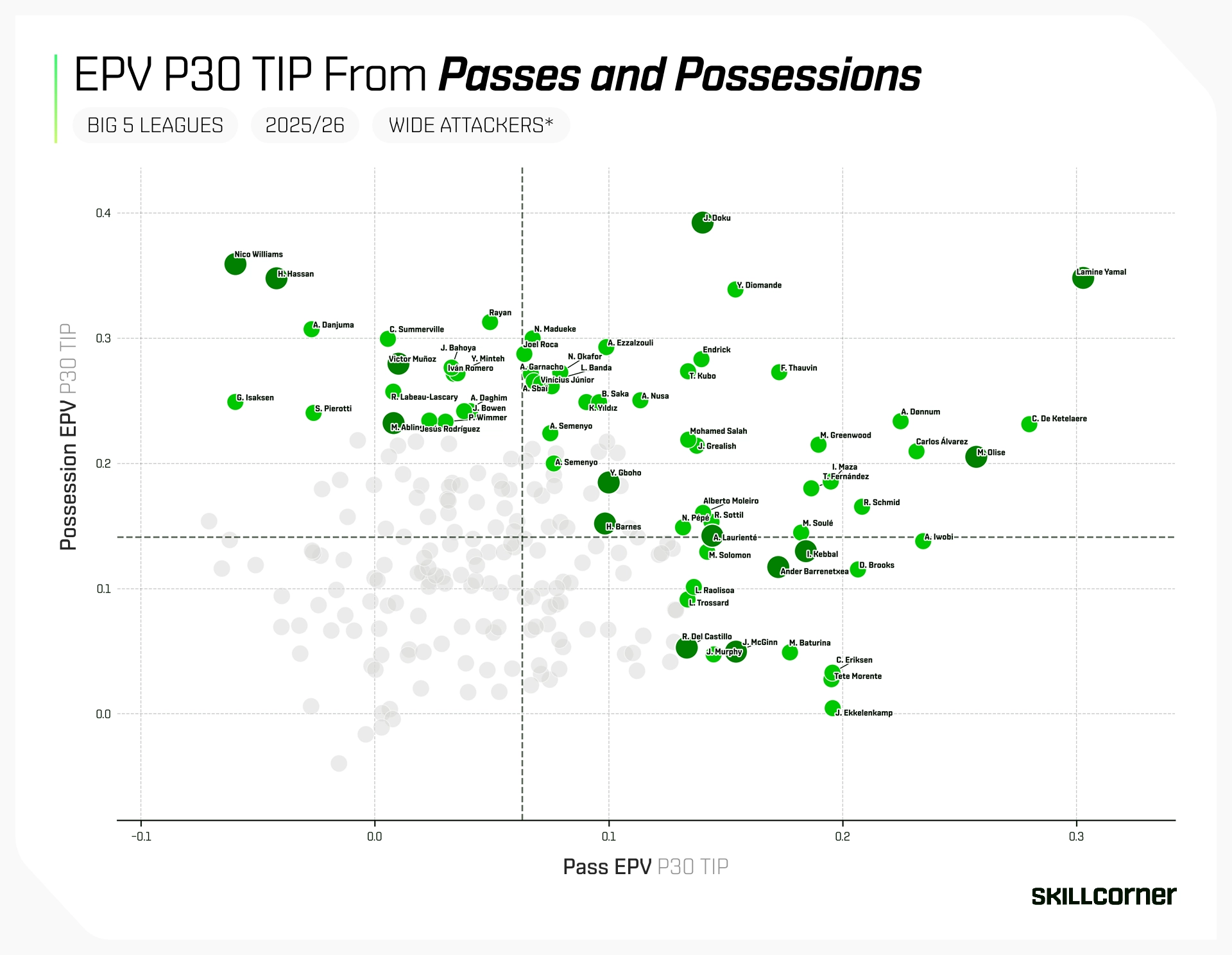
In this piece we go a step further. Rather than simply splitting high-impact passers from carriers, we look at the defining abilities that differentiate players within each of those two groups. We can do that thanks to the flexibility and depth of our event-level Game Intelligence data, Dynamic Events, which allows clubs and analysts to interrogate specific football situations at a global scale.
The Passers
We first analyse the players who stand out for their ability to impact the game with their passing. Does producing an above-average contribution mean that these players share the same technical and tactical profiles?
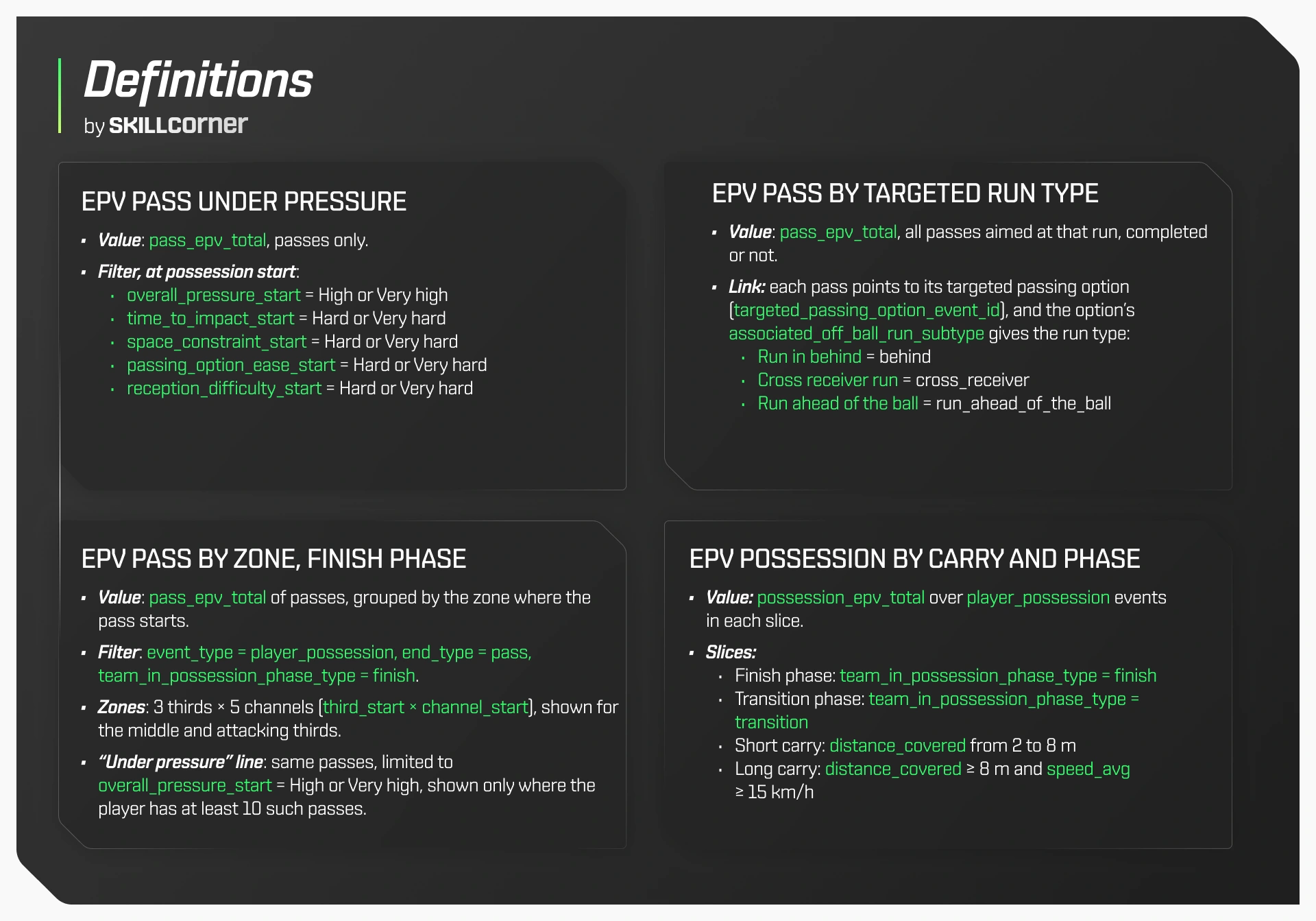
To find out, we bring in the Pressure flags from Dynamic Events to see how each player’s output changes when they receive the ball under real constraints. For each flag, we isolate only its most demanding bands: Hard or Very Hard for each submodel, and High or Very High for the Overall Pressure Degree.
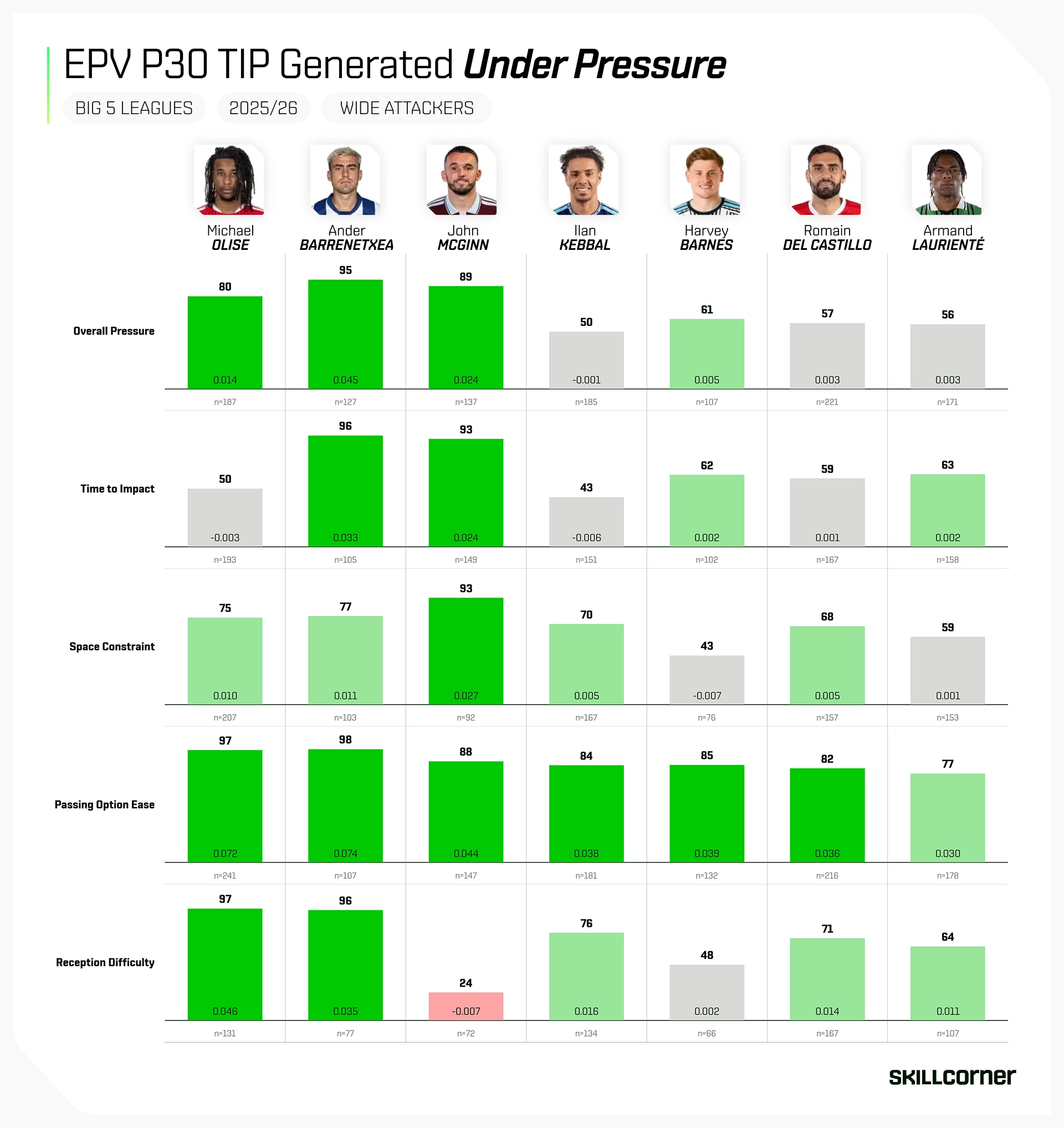
- Time to Impact: measures the distance and approach speed of closing defenders.
- Space Constraint: defines the space available to the receiver based on opposition density, proximity to the touchline, and body positioning.
- Passing Option Ease: evaluates the availability of nearby teammates and the likelihood of completing a pass.
- Reception Difficulty: accounts for the technical load required to control the ball, considering factors such as pass speed, height, etc.
Ander Barrenetxea is among those who, in relative terms, produce high EPV under High or Very High pressure. Michael Olise remains one of the best when receiving with few teammates available or under a heavy technical load on first touch.
Next, using SkillCorner's Off-Ball Runs, we shift to a more tactical question: which type of run does a player serve most effectively?
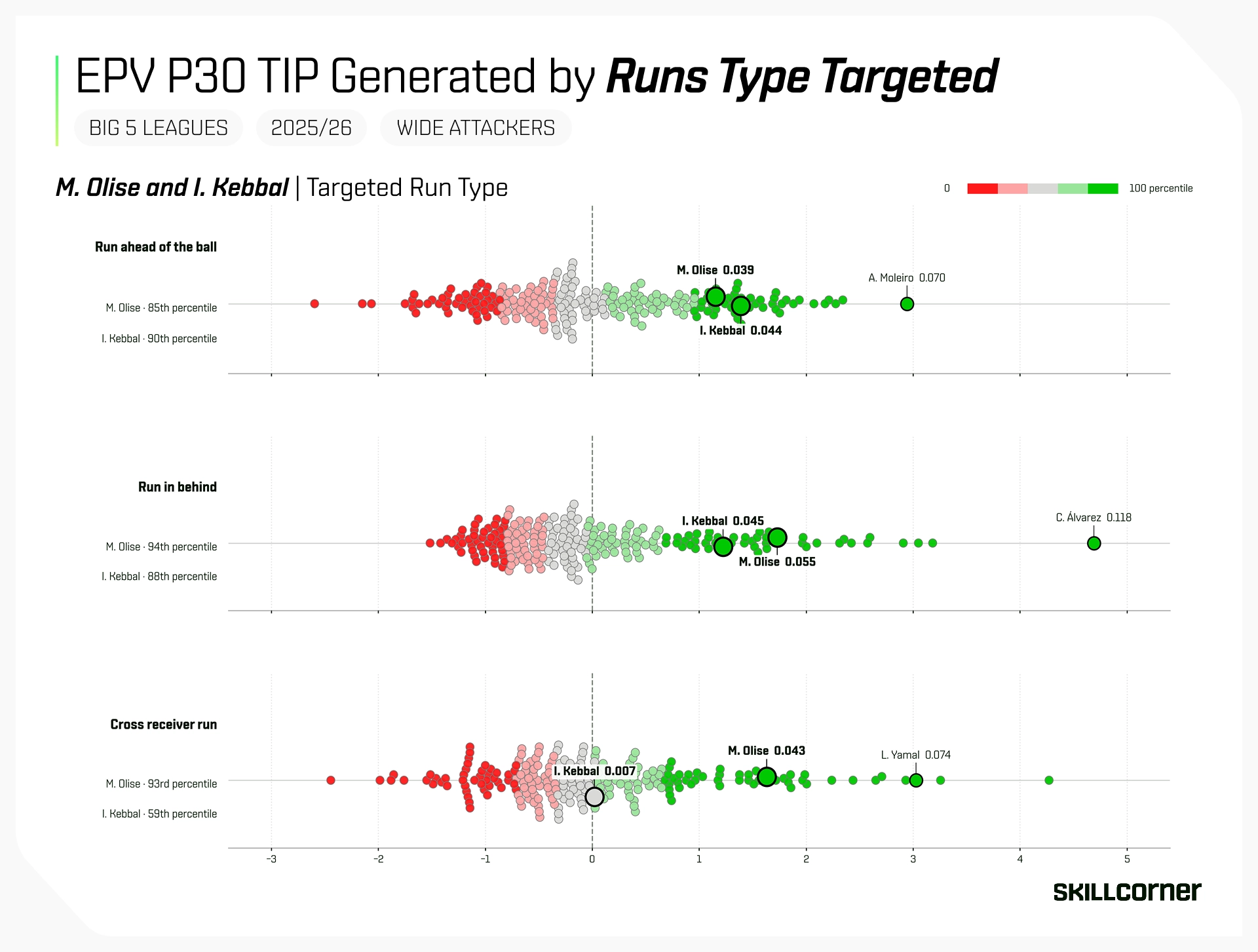
Ilan Kebbal produces high value when serving runs in behind, while Olise is one of the strongest all-round contributors across different run types.
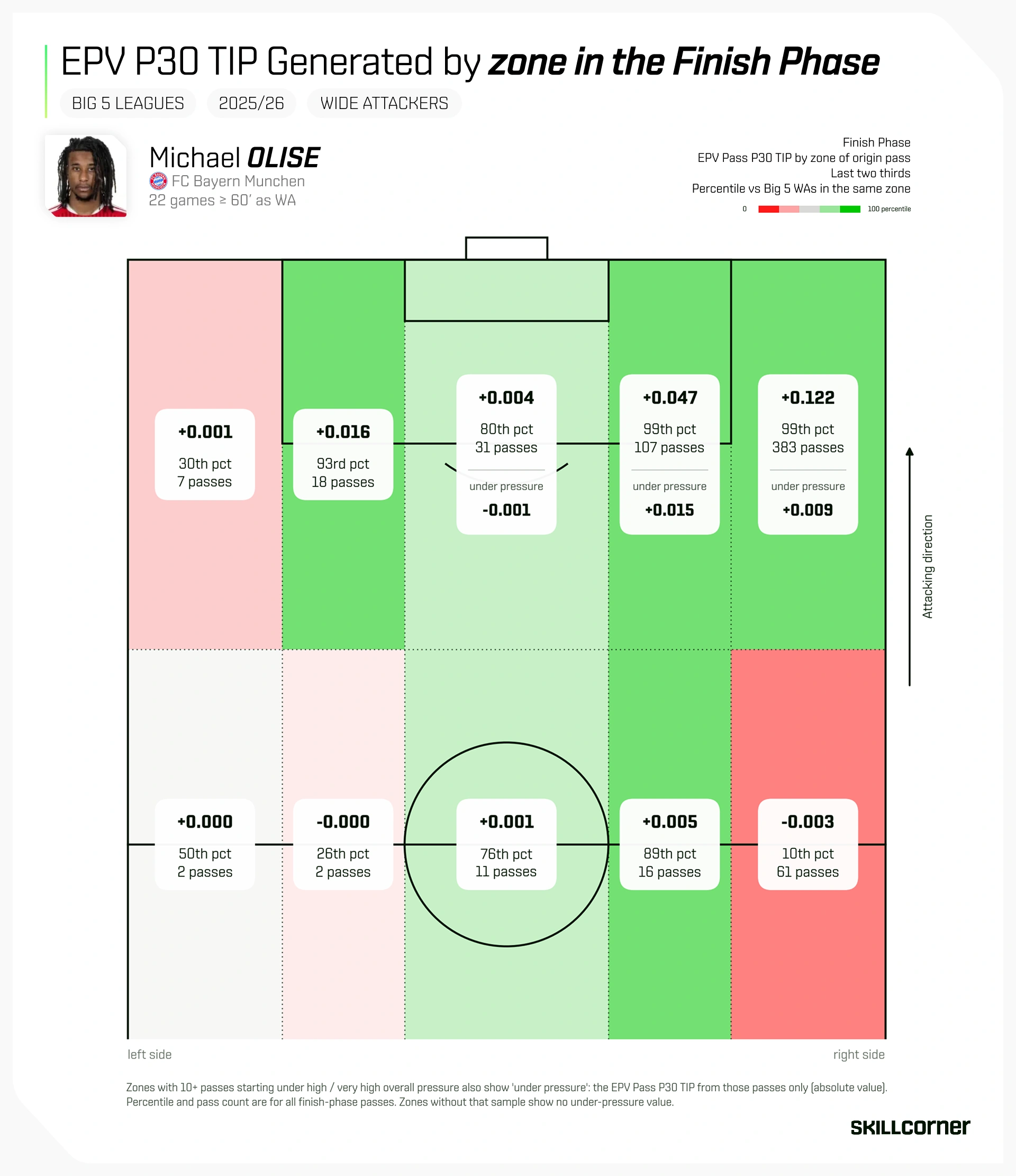
As a final step, we break a player's output down by zone and Phase of Play.
Olise's contribution is set against the wide attackers of the Big 5, in both percentile ranking and absolute value, with a focus on the EPV he generates under pressure in his most productive areas.
The Ball Carriers
Applying the same logic to the ball carriers, we separate the types and context of their actions to understand the conditions under which they produce the highest EPV values.
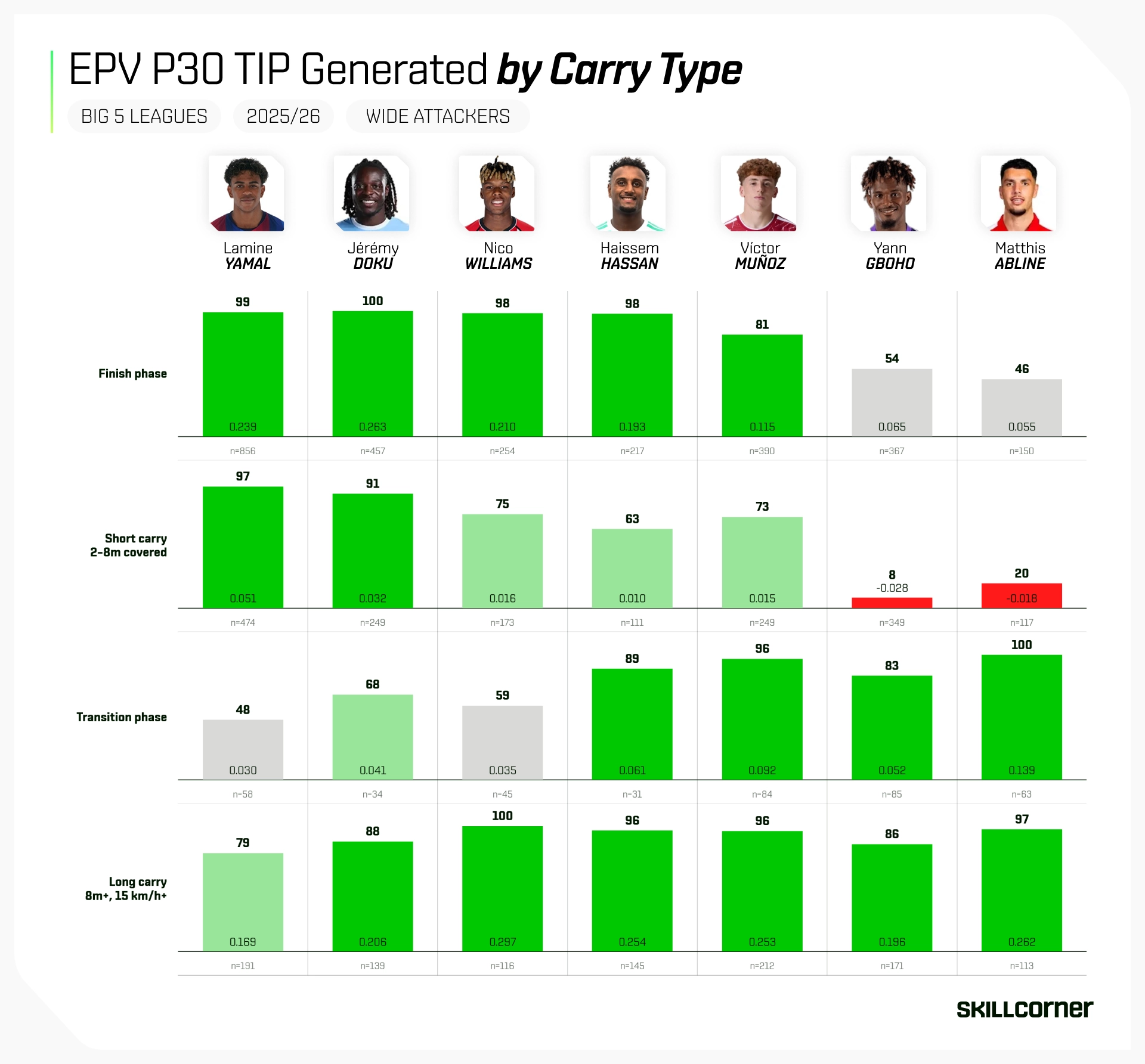
Lamine Yamal ranks at the very top for short carries in the finish phase — consistent with a previous physical-data study, where he stood out for explosive actions rather than high-volume or high-intensity ones.
Combining SkillCorner's Physical and Game Intelligence data this way lets users build unique, proprietary analysis around the specific demands of their own football style.
Matthis Abline and Yann Gboho, by contrast, generate exceptional value when carrying the ball over longer distances in open space.
We can also zoom in from individual possessions to 1v1 play.
In our piece on young Italian players moving abroad, we introduced three custom 1v1 situations; with EPV, we can now measure the value a player creates from each, beyond volume and raw success.
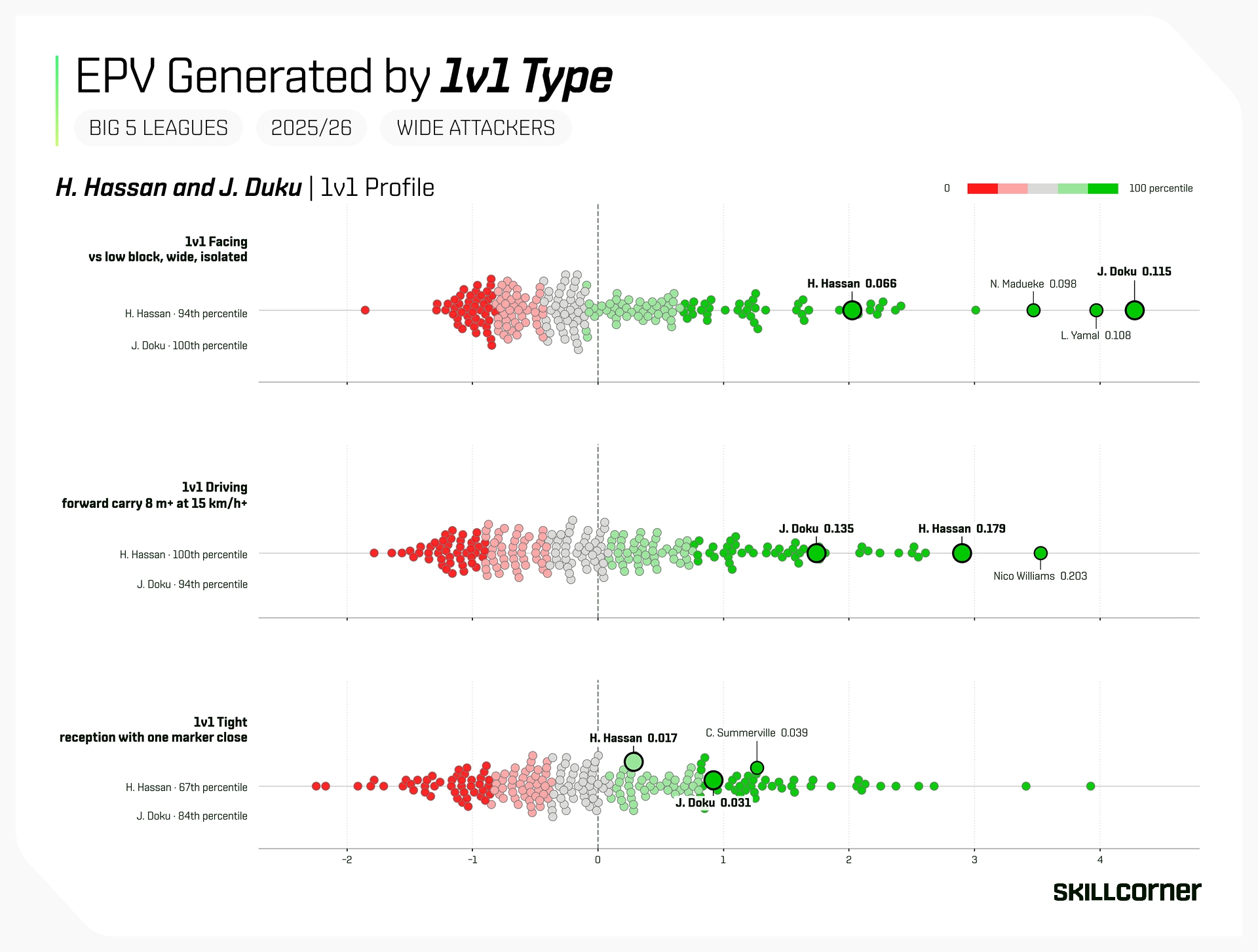
- 1v1 Facing is about addressing a set defender through close control in a specific context: a wide channel, against a low block, isolated.
- 1v1 Driving describes engaging a defender through pace, covering ground quickly.
- 1v1 Tight covers situations in which a defender closes the carrier in as the ball arrives.
Haissem Hassan and Jérémy Doku appear as elite contributors.
Beyond Volume: Reading Impact in Context
Across this analysis, EPV has done more than rank wide attackers by how much value they create. It has shown where and how they create it: which passers hold up under pressure, the types of run a player serves best, the zones and phases where their value concentrates. Among the carriers, who generates value through short actions, who through long carries in open space, down to individual 1v1s.
The common thread is context. A headline number identifies an effective player; the event-level detail identifies the conditions under which that effectiveness holds, and whether those conditions fit a given game model.
This is just one example of the analysis the event-level data in our Game Intelligence package supports. Get in touch to discuss how it can be applied to your recruitment process.