Metric Explainer: On-Ball Engagements – Counter Press
We can now identify when a player presses the ball-carrier immediately after a turnover, and how it affects the opposition's play.
A player’s defensive behaviour reflects how they shape the game without the ball: the way they close the ball-carrier down, restrict space, and influence what the opponent does next.
Measuring it has always been a challenge for event data, which logs the finished action — the tackle, the interception — but only in the moments a defender actually makes contact with the ball.
On-Ball Engagements bridge that gap.
Recorded whether or not the defender touches the ball, they capture both the volume and the effect of a player’s defensive work, laying the groundwork for richer analysis.
Every engagement is defined by the type of pressure behind it — Pressing, Pressure, Recovery Press or Counter Press — the outcome it leads to, and the phase of play it happens in.
To see every engagement type and outcome explained in full, head to Episode 1.
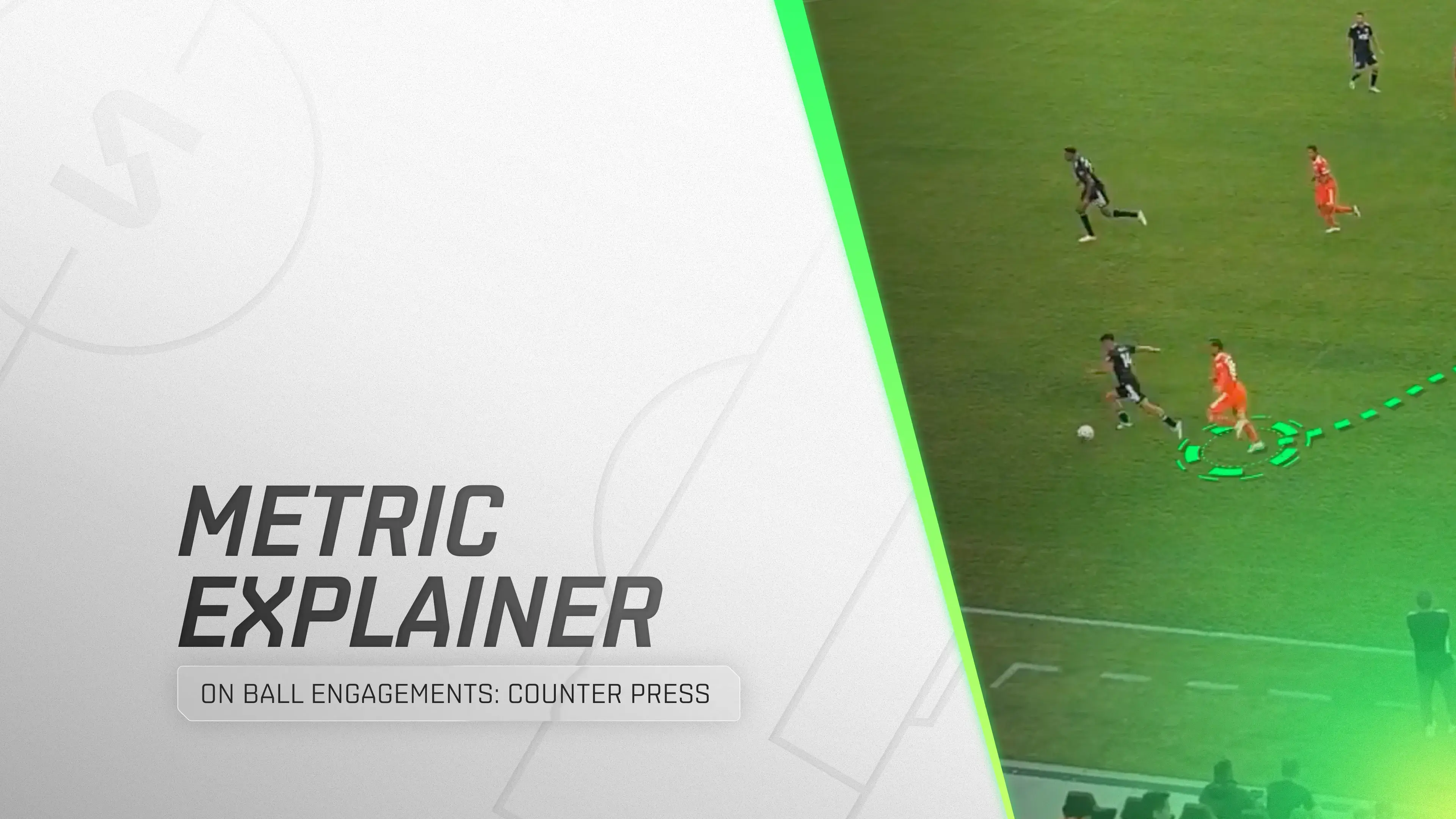
Here, we focus on Counter Press, pressure applied within three seconds of a turnover, looking at how often a player does it, and what the outcome is.
Applied Use Case
The Counter-Pressing Wide Attacker
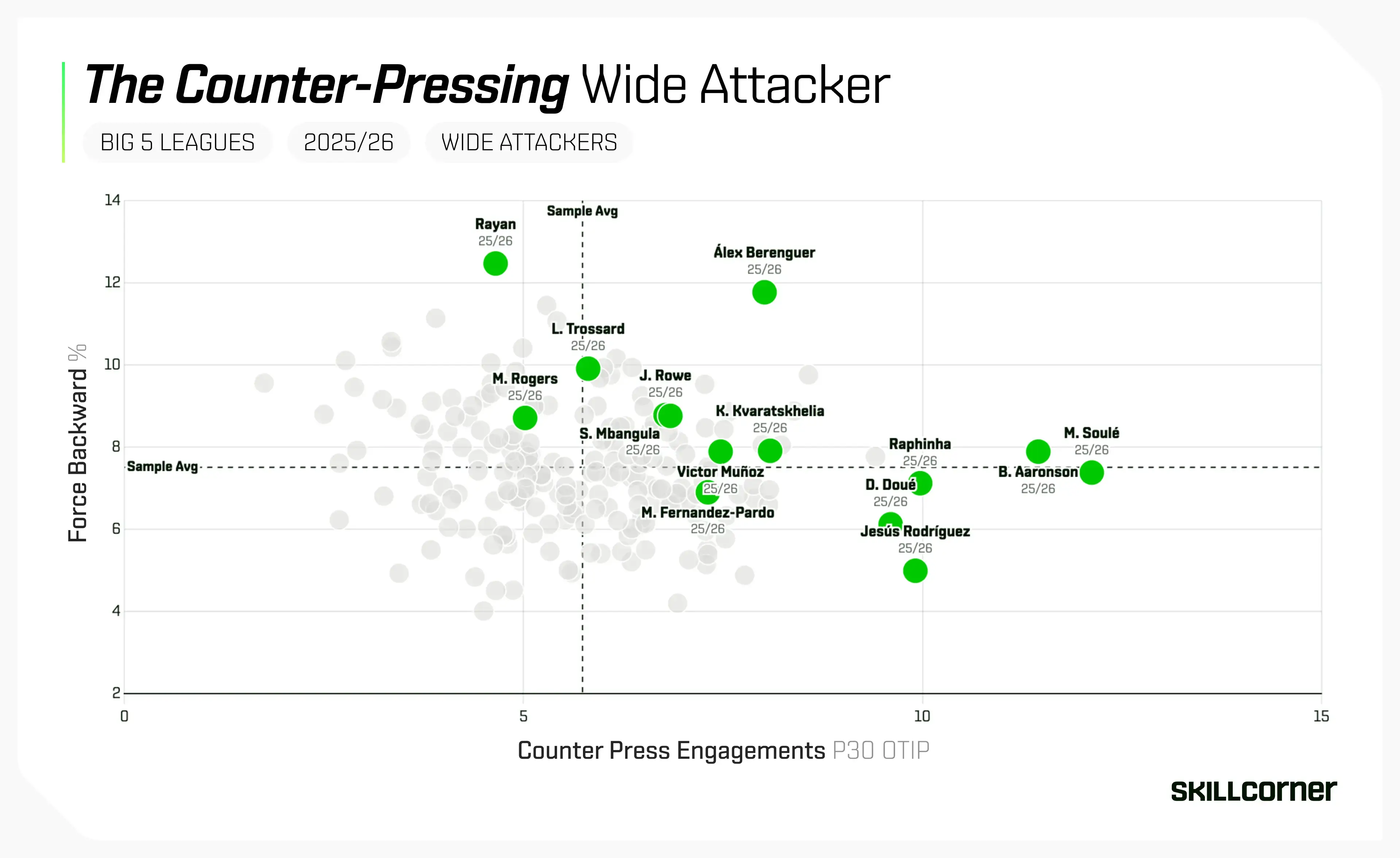
Within an offensive, aggressive playing style, the ability to jump on the opposition immediately after losing the ball is extremely important. Mapping Counter Press Engagements against one of the On-Ball Engagement outcomes, Force Backward, separates the attackers who counter-press most often from those whose actions most often turn the carrier back towards their own goal.
Metric Definition
Counter Press Engagements is the number of times a player applies pressure to the opposition's ball-carrier within three seconds of their team losing possession, measured per 30 minutes of opponent time in possession (OTIP).
Force Backward Percentage is the share of a player's On-Ball Engagements that force the ball-carrier to pass or carry backwards, towards their own goal. It is a measure of the pressure's effect on the opponent's ability to progress.

On-Ball Engagements are one of the key contextual metric groups that make up our Game Intelligence suite, combining on and off-ball insights for more precise performance and stylistic profiling. Get in touch to learn more.